The key welding safety rules are: wear the right PPE, protect your eyes from arc light, control fumes with good ventilation, remove flammable items, keep cables and equipment dry and in good order, and secure gas cylinders. Always follow your site rules and ask a trained supervisor if you are unsure.
Key Takeaways
- Welding hazards include metal fumes, UV radiation, burns, electric shock and cuts, as listed by OSHA.
- Never weld without a proper helmet, dry gloves and covered clothing.
- Keep the work area clear of fuel, paper, cloth and other flammable items.
- Good ventilation and fume control protect your lungs.
- Safety training is for everyone near welding work, not only the welder.
Why do welding safety rules matter?
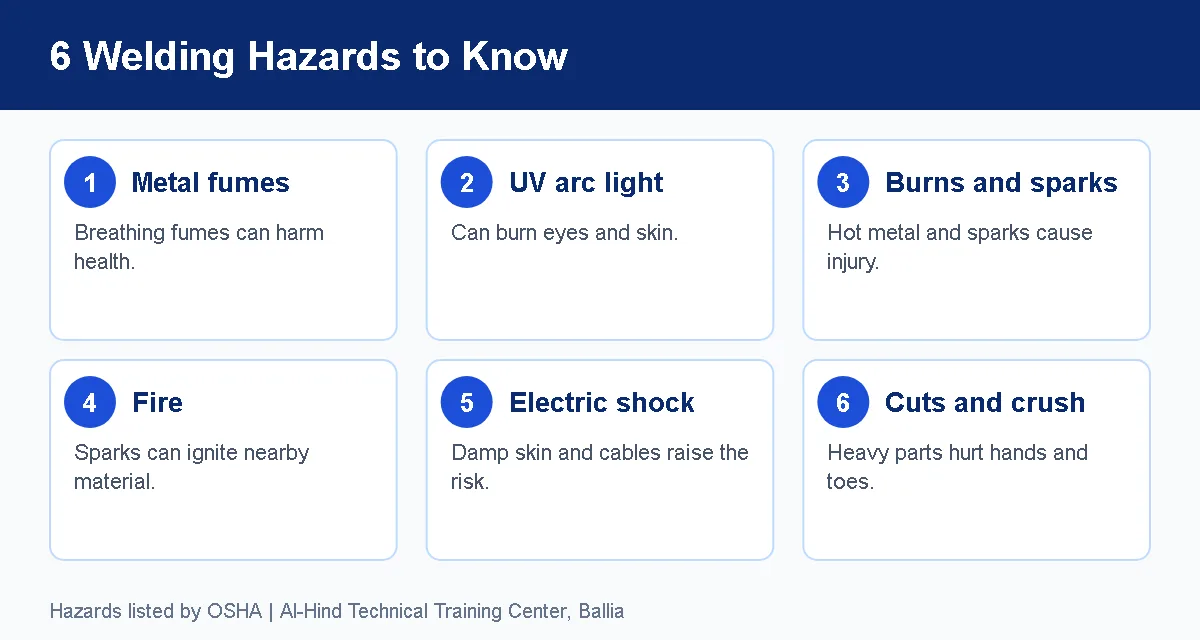
Welding joins metal using intense heat or electric arcs, so the hazards are serious. OSHA names metal fumes and ultraviolet (UV) radiation as health hazards, and burns, eye damage, electric shock, cuts and crushed fingers and toes as safety hazards. Simple rules prevent most of these injuries.
Many trades work near welders. Pipe fitters, electricians and helpers can all be hurt by sparks or arc light even if they are not welding themselves. That is why basic welding safety is useful for every technician.
What PPE should a welder wear?
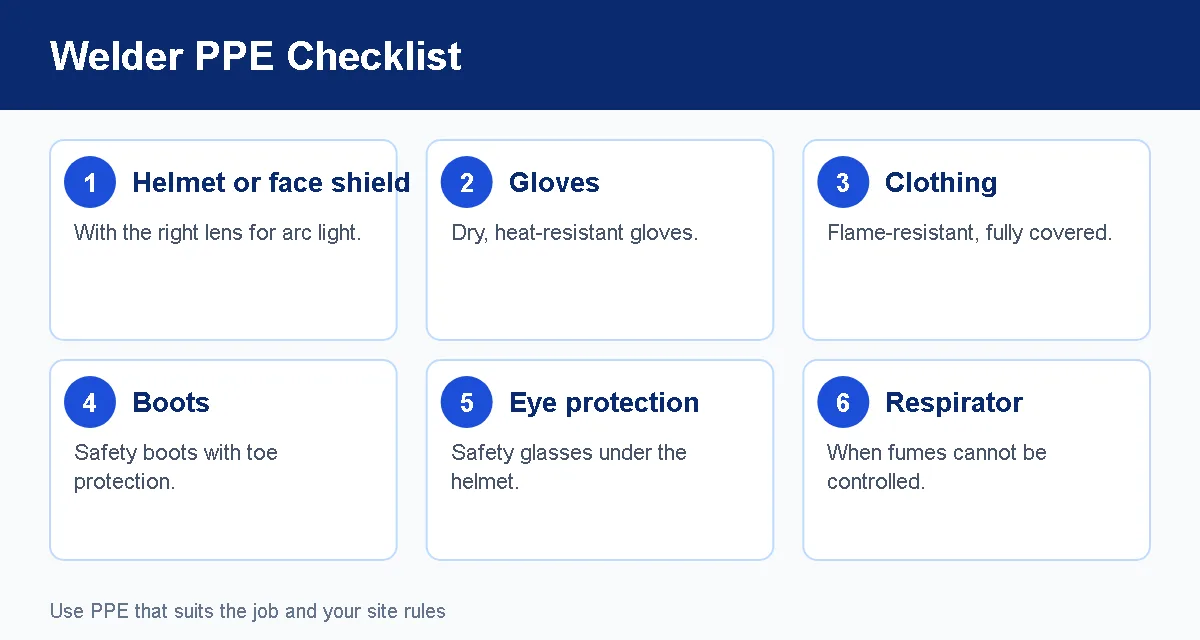
PPE means personal protective equipment. The right gear is your last line of defence, so check it before every job.
| PPE item | Why it is needed | Quick check |
|---|---|---|
| Welding helmet or face shield | Protects eyes and face from arc light and sparks | Lens is clean and not cracked |
| Welding gloves | Protect hands from heat, sparks and shock | Dry, no holes |
| Flame-resistant clothing | Prevents burns from sparks | Sleeves and collar fully covered |
| Safety boots | Protect feet from heat and falling parts | Toe protection, no worn soles |
| Safety glasses | Protect eyes when the helmet is lifted | Worn under the helmet |
| Respirator | Protects lungs when fumes cannot be controlled | Correct type and fit |
How do you control fumes and fire risk?
Fumes are a health hazard, and OSHA publishes guidance on controlling hazardous fumes and gases during welding. In practice, weld in a ventilated area, keep your head out of the fume plume and use exhaust or fans where possible. In closed or tight spaces, get proper permission and checks before work starts.
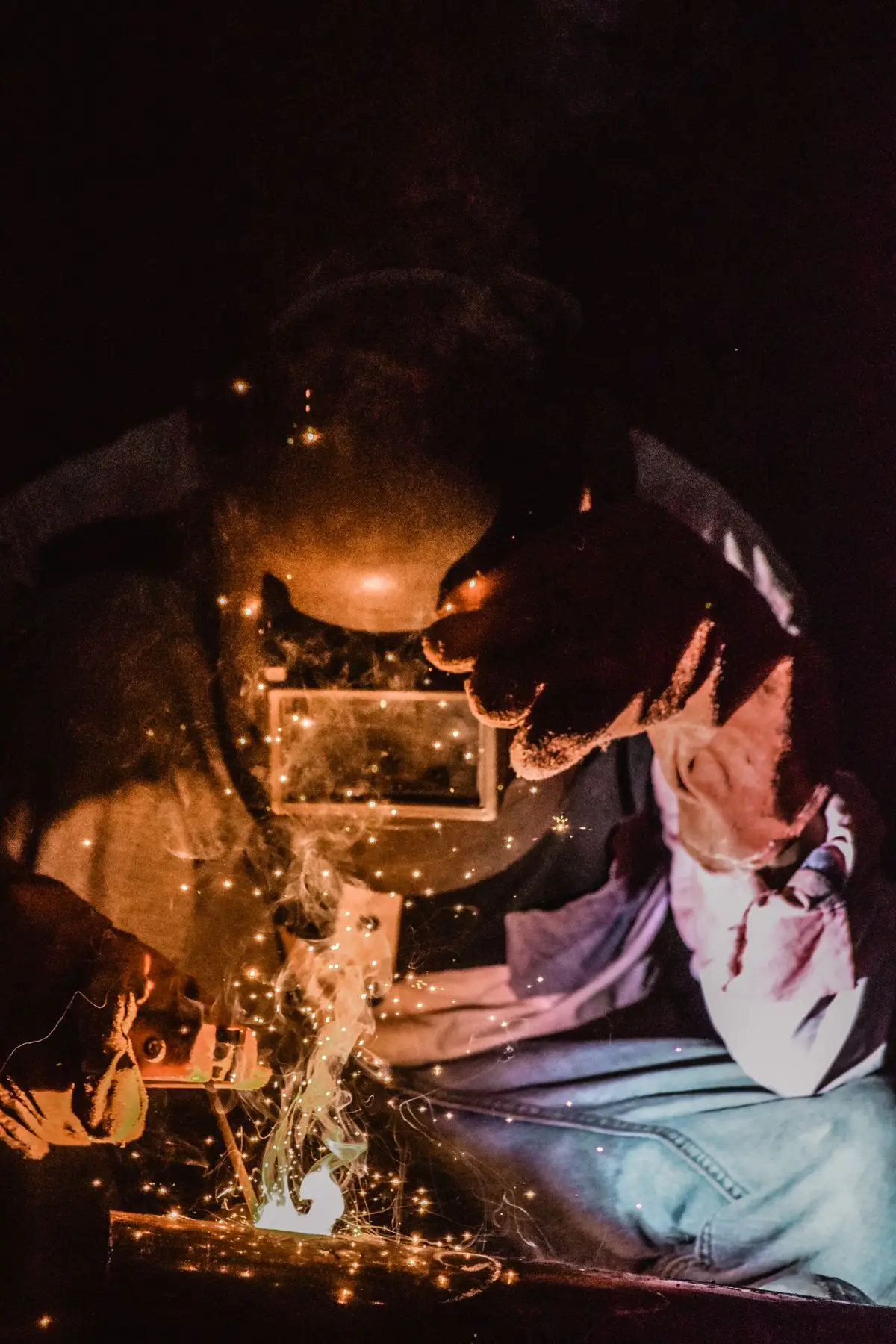
Sparks can travel and land on materials far from the weld. Remove or cover flammable items, keep a fire extinguisher close and have another person watch for fire where your site rules ask for it. Read our guide on electrical safety rules for electricians for related shock-prevention habits.
What is a safe welding routine before you strike an arc?
- Read the job instructions and any permit your site requires.
- Check your PPE and replace anything damaged.
- Clear flammable items and set up screens for people nearby.
- Inspect cables, electrode holders and earth clamps for damage, and keep them dry.
- Secure gas cylinders upright and check hoses for leaks.
- Make sure ventilation or fume extraction is working.
- After work, switch off equipment and check the area for hot spots.
For more detail, read the official OSHA page on welding hazards and solutions. Indian site rules and company policies may add more requirements, so follow those too.
How does safety training help your career?
Employers value workers who follow safety rules, because accidents stop work and cost money. Safety awareness is part of many trade tests and interviews, and it is a strong reason a supervisor will trust you with more responsibility. You can also read PPE for technicians to learn about gear for other trades.
Why learn at Al-Hind Technical Training Center?
- Over 15 years of experience in technical training.
- ISO 9001:2015 certified institute.
- Courses in Electrician, HVAC/AC Technician, Pipe Fitter and Safety, plus international safety certification (NEBOSH, IOSH, OSHA).
- Placement assistance for Saudi Arabia, UAE, Qatar, Oman and Bahrain, which is assistance and not a job guarantee.
- Welding is not one of our listed courses, but site safety is taught in our safety programmes. Ask the centre for details.
See the safety course in Ballia, our full course list and the location page.
Frequently asked questions
What are the main hazards in welding?
OSHA lists metal fumes and ultraviolet radiation as health hazards. Safety hazards include burns, eye damage, electric shock, cuts and crushed fingers and toes. Fire from sparks is also a major risk, so the area around the weld must be clear.
What PPE is needed for welding?
A welder needs a helmet or face shield with the right lens, dry welding gloves, flame-resistant clothing that covers the body, safety boots and safety glasses. A respirator may be needed when fumes cannot be controlled. Always follow your site rules.
Why is welding fume dangerous?
Welding fume contains tiny metal particles and gases that can harm the lungs and health over time. You can reduce the risk with good ventilation, fume extraction, keeping your head out of the fume plume and using a respirator when required.
Can sparks cause fire far from the weld?
Yes. Sparks and hot metal can travel and land on cloth, paper, fuel or other materials away from the weld. Clear or cover flammable items, keep an extinguisher nearby and check the area for hot spots after the job ends.
Do other trades need welding safety knowledge?
Yes. Pipe fitters, electricians, helpers and supervisors often work near welding. Arc light can hurt eyes, and sparks can cause burns or fires. Basic welding safety helps every technician protect themselves and the people working around them.
Does Al-Hind teach safety courses?
Al-Hind offers a Safety Diploma and international safety certification (NEBOSH, IOSH, OSHA) along with Electrician, HVAC and Pipe Fitter courses. Welding is not a listed course. Call or WhatsApp 7393017040 for details on duration, eligibility and fees.
Conclusion
Welding safety comes down to good habits: right PPE, protected eyes, clean air, a clear area and well-kept equipment. Follow the same routine every time, and speak up when something looks unsafe.
Want safety training? Call or WhatsApp 7393017040, or visit Al-Hind Technical Training Center, Umarganj, Garwar Road, Near Bank of Baroda, Ballia. Website: alhindtechnicalskill.com.
By Al-Hind Technical Training Center Team | Last updated: 26 October 2026