PPE for technicians means the protective gear, such as helmets, gloves, safety shoes and goggles, that reduces injury when a hazard cannot be removed. The right PPE depends on the task, and it never replaces safe methods like isolating power. Always work under a qualified supervisor.
Key Takeaways
- PPE for technicians is the last line of defence, used after hazards are controlled.
- Match the PPE to the task: gloves for electricians differ from gloves for welders.
- Inspect gear before every use and replace damaged items.
- Look for the relevant standard mark and follow site rules.
- Gulf employers expect PPE knowledge and strict safety habits.
What is PPE for technicians and why does it matter?
PPE means personal protective equipment: the gloves, shoes, helmets, goggles and other gear that protect your body from workplace hazards. PPE for technicians matters because it is the last barrier between you and an injury when other controls fail.
The US Occupational Safety and Health Administration (OSHA) explains that PPE is used when hazards cannot be removed or controlled in other ways. In practice this means the first step is always to remove or reduce the danger, for example by switching off and isolating power. PPE comes after that, not instead of it.
Technicians face many hazards: electric shock, flying particles, sharp edges, heavy objects, hot surfaces, noise, dust and chemicals. Each hazard needs the right type of PPE. Wearing the wrong item can give a false sense of safety.
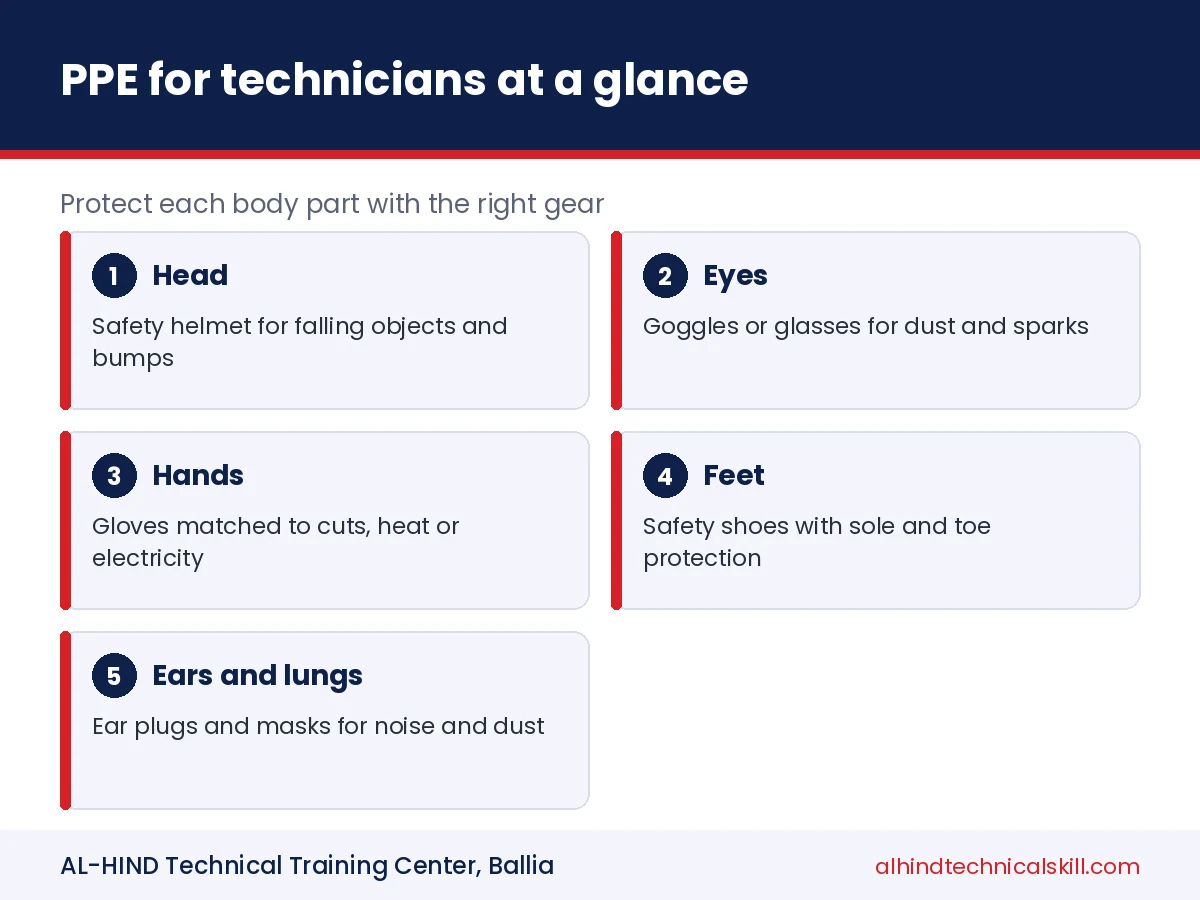
Which PPE does a technician need for each type of site work?
The right PPE depends on the task, so a site supervisor or safety officer should decide it after assessing the hazards. The table below gives a general guide for common trades and is not a substitute for site rules.
| Body part | PPE item | Used for |
|---|---|---|
| Head | Safety helmet | Falling objects, bumps, some electrical protection if designed for it |
| Eyes | Safety goggles or glasses | Drilling, cutting, grinding, dust, sparks |
| Hands | Gloves (type depends on task) | Cuts, heat, chemicals, or insulated gloves for electrical work |
| Feet | Safety shoes | Heavy objects, sharp items, slippery floors |
| Ears | Ear plugs or muffs | Loud machines and tools |
| Body | Overalls or hi-vis vest | Visibility, skin protection, movement of vehicles |
| Lungs | Dust mask or respirator | Dust, fumes, paint, chemicals |
Are all gloves the same?
No. A cotton glove protects from rough edges but gives no electrical protection. Insulated gloves for electrical work are specially made and tested for a stated voltage rating. A welder needs heat-resistant gloves. Always use the glove type the task and supervisor require.
What PPE do electricians need?
Electricians commonly need insulated gloves, insulated or dielectric footwear, a safety helmet, safety glasses and, for some tasks, arc-rated clothing. Insulated tools are also essential, even though they are not worn.
Before any work, switch off, isolate, lock and test that the circuit is dead. PPE is a backup. Work only under a qualified supervisor, and never test or work on live equipment unless you are trained, authorised and following site procedure. Read our full guide to electrical safety rules for electricians and our electrician course in Ballia page for training details.
- Check insulated gloves for cuts, holes or damp before every use.
- Do not use metal jewellery, chains or watches near live parts.
- Use insulated screwdrivers and pliers designed for the job.
- Keep rubber mats or insulated platforms where the site requires them.
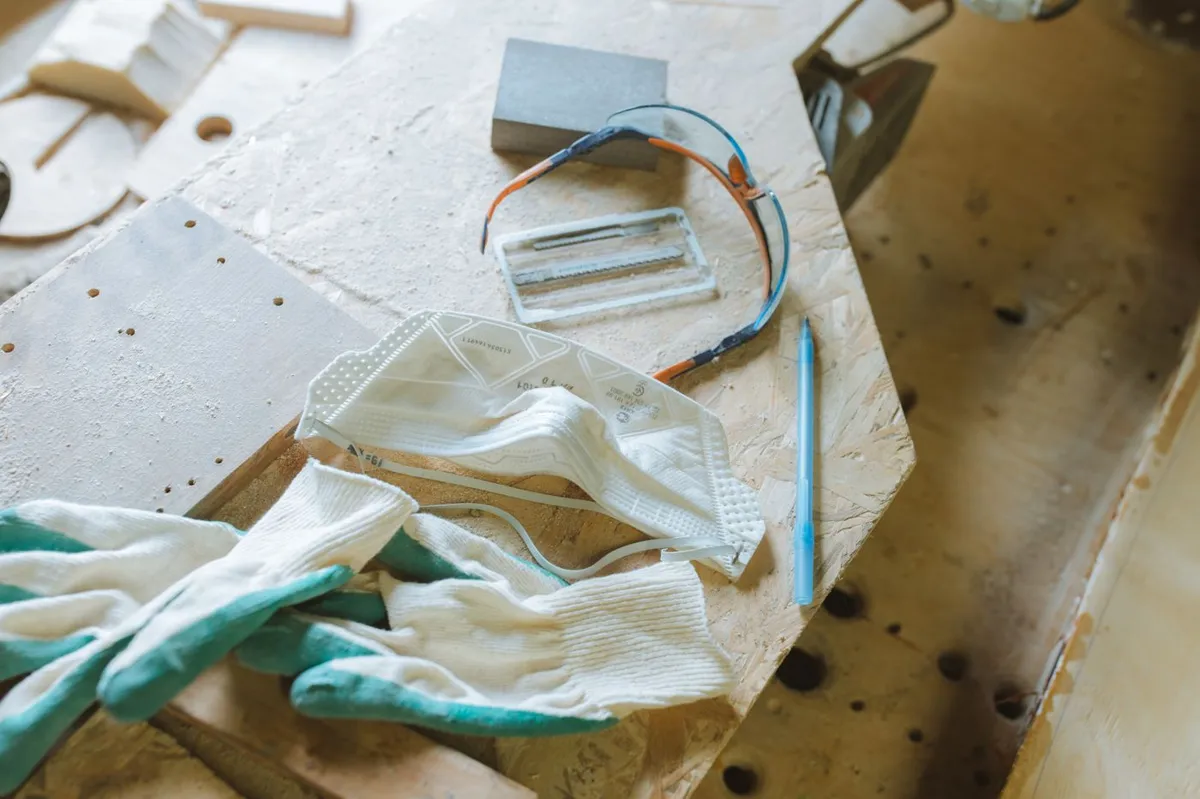
How should you check and look after your PPE?
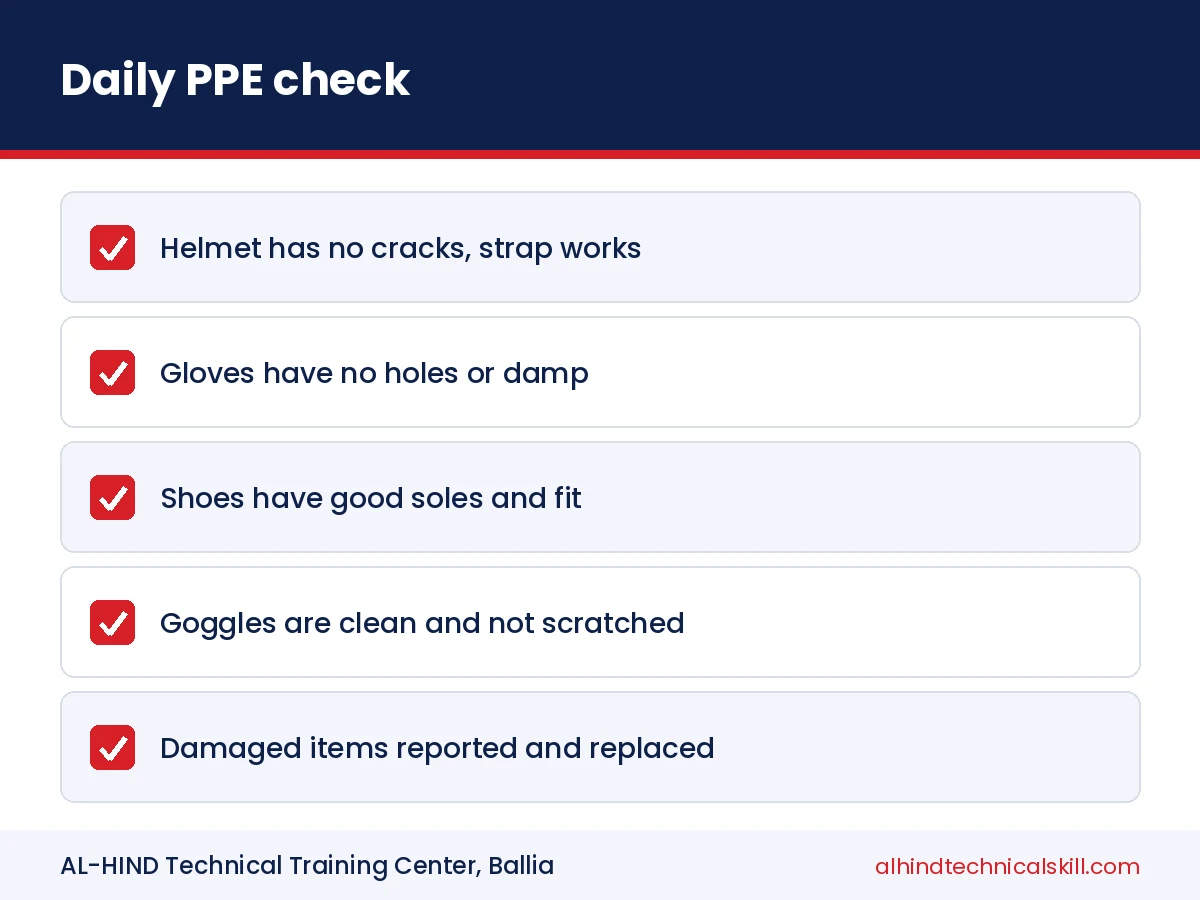
Inspect your PPE before each use, clean it as the maker advises, store it properly and replace it when it is damaged or expired. A cracked helmet or torn glove should be removed from use at once.
- Look for cracks, cuts, holes, loose straps and worn soles.
- Check that the size fits. Loose gloves and large goggles slip.
- Read the label for the standard mark and any expiry or rating.
- Clean and dry the item after use. Keep it away from sunlight, oil and chemicals unless it is made for them.
- Report damage to your supervisor and ask for a replacement.
In India, look for products that carry the relevant standard mark, such as that of the Bureau of Indian Standards (BIS) where it applies. For work abroad, your employer will tell you which standards the site follows. Do not buy the cheapest unmarked item for safety use, because it may fail when you need it.
What mistakes do technicians make with PPE?
The most common mistakes are wearing no PPE for a quick job, using damaged gear, choosing the wrong type, and removing PPE because it feels hot or uncomfortable. Each of these can lead to a serious injury within seconds.
- “It is only a small job” is the thinking behind many accidents.
- Using sandals or sports shoes on a site instead of safety shoes.
- Wearing a helmet with the chin strap hanging loose where it is required.
- Using ordinary glasses instead of impact-rated safety glasses.
- Sharing ear plugs or masks that should be personal.
Good habits come from training. A safety course teaches you hazards, hierarchy of controls and the proper use of equipment. See our safety course in Ballia page, and for hot work see our guide to welding safety rules.
Why do Gulf employers care about PPE knowledge?
Gulf sites often have strict safety rules, daily toolbox talks and site induction, and workers may be sent away if they ignore PPE rules. Showing that you already know how to wear and check PPE makes a good impression in interviews and trade tests.
Climate also matters. Heat on Gulf sites can be intense, so employers watch for heat stress and may require breaks, water and suitable clothing. Follow the site safety officer’s instructions at all times. Our interview questions for technicians post shows the kind of safety questions you may face.
Why learn at Al-Hind Technical Training Center?
Al-Hind Technical Training Center in Ballia focuses on practical learning, where students handle real tools and learn safe working habits from the start. We also offer counselling and guidance about the Gulf job process, though we never promise jobs or visas. To see how safety fits into each trade, view our courses, the safety course and the admission steps.
Frequently asked questions
What PPE is basic for technicians on site?
Most sites expect a safety helmet, safety shoes, safety glasses or goggles, and suitable gloves, plus hi-vis clothing where needed. Extra items such as ear protection, masks or insulated gloves depend on the task. Your supervisor and site rules decide the final list.
Which gloves should electricians use?
Electricians use insulated gloves rated for the voltage they work near, often with outer protective gloves, but only for approved tasks. Ordinary cotton or leather gloves do not protect from shock. Check gloves for damage before each use and follow your supervisor’s instructions.
Is PPE enough to be safe from electric shock?
No. PPE is a last line of defence. The first step is to switch off, isolate, lock out and test that the circuit is dead. Work only under a qualified supervisor, and never rely on gloves or shoes alone to protect you.
How often should PPE be replaced?
Replace PPE when it is damaged, worn, past its expiry date, or after a serious impact or incident. Some items have a maker’s shelf life or a periodic test requirement. Inspect your gear before every use and report faults immediately.
Do I need to buy my own PPE for a Gulf job?
This depends on the employer and contract. Many employers provide basic PPE, but some may expect workers to bring certain items. Ask in writing before you travel, and read the contract. Do not pay agents for equipment without a clear written explanation.
Can a safety course help me get a technician job?
A safety course teaches hazards, PPE use and safe work habits, which employers value. It supports your application but does not guarantee a job. Practical trade skill, experience and verified documents remain the main requirements for most technician roles.
Conclusion
Knowing PPE for technicians is basic to a long, safe career. Match the gear to the hazard, inspect it every time, replace what is damaged, and always remember that PPE comes after isolation and safe work methods.
If you want to learn trade skills together with safe working habits, Call or WhatsApp 7393017040 or 7860262615, or visit the centre at Umargang Gawar Road, near Bank of Baroda, Ballia, Uttar Pradesh 277001.