The ITI vs short term course choice comes down to time and recognition: ITI is longer and carries a national trade certificate, while a short-term course is faster and focused on practical skill. Many students do both. Choose by your goal, time and family situation.
Key Takeaways
- ITI is longer and recognised nationally; short courses are quick and practical.
- Choose ITI for long-term and government-linked paths if you can spend the time.
- Choose a short course to start working sooner or sharpen practical skill.
- You can combine both for better trade test confidence.
- Visit the institute, ask for written terms, and avoid guaranteed-job promises.
What is the main difference in the ITI vs short term course choice?
The main difference is length and recognition. An ITI is a longer, government-recognised programme under the Directorate General of Training (DGT), while a short-term technical course is a shorter, skill-focused programme run by a training centre. Both can lead to work, but they suit different needs.
ITI courses are offered in many trades and are run by government and private ITIs. Their certificates follow a national framework and are commonly asked for in government and many private jobs. Short-term courses focus on hands-on practice in one skill, so you can start learning quickly and often fit them around your life.
In the ITI vs short term course debate, neither route is always “better”. The right choice depends on your age, family situation, goal and how soon you want to start earning.
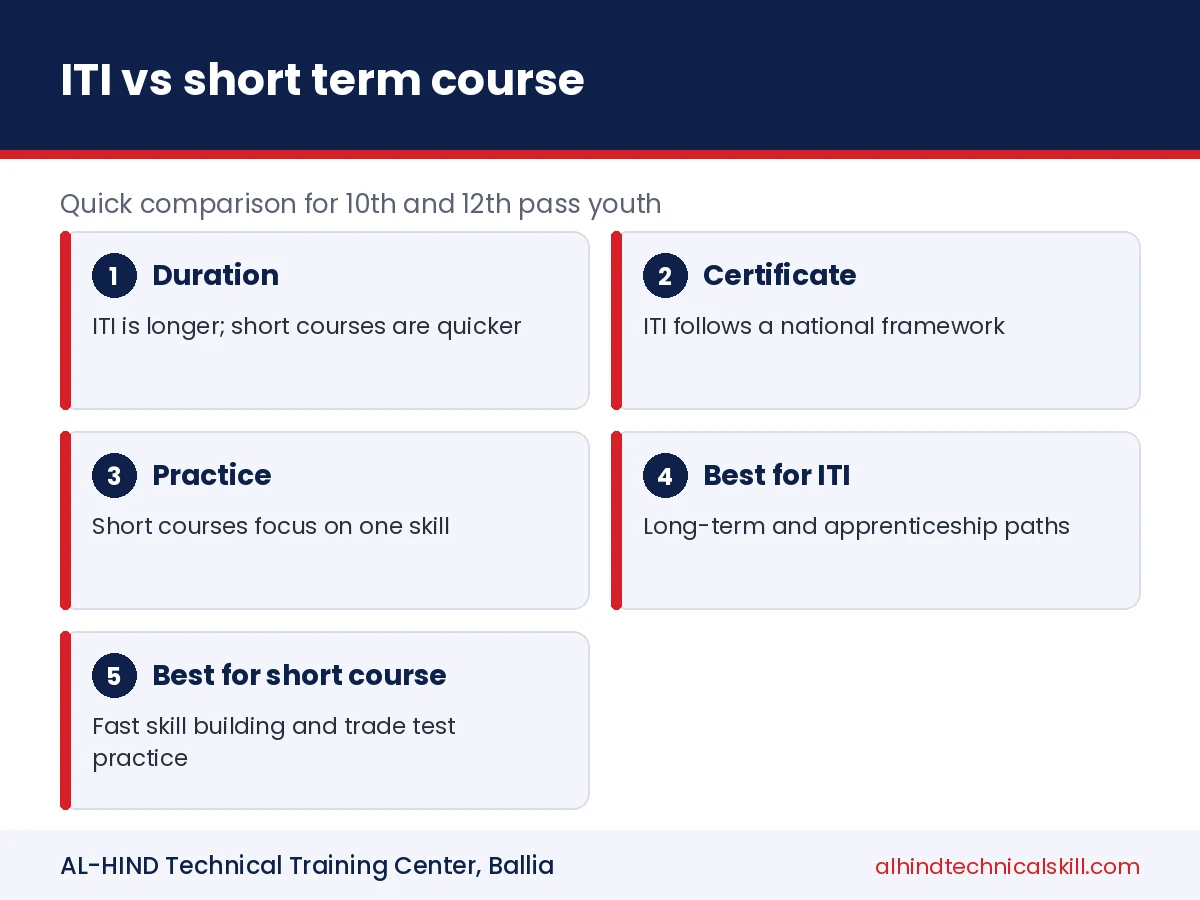
How do ITI and a short term course compare side by side?
A short-term course is usually faster and more practical, while an ITI is usually longer and carries a recognised national certificate. The table gives a simple comparison, but always check the details of each institute.
| Point | ITI | Short-term technical course |
|---|---|---|
| Duration | Longer, varies by trade | Shorter, varies by centre |
| Recognition | National certificate under the government framework | Depends on the centre; ask what the certificate means |
| Learning style | Theory plus workshop practice | Mostly practical, focused on one skill |
| Admission | Through an official admission process with eligibility rules | Usually direct admission at the centre |
| Useful for | Government jobs, apprenticeships and long-term careers | Quick skill building and refresher training |
| Best for | Students who can give more time | Those who want to start working sooner |
Check current ITI admission rules, trades and seat details on official government and state portals, because they change every session.
ITI vs short term course: which option is better after 10th or 12th?
After 10th, an ITI is a strong long-term choice if you can spend the time, while a short-term course helps if you need income soon. After 12th, you may add a short course to an existing qualification to become job-ready. Read our guide to technical courses after 12th in Ballia for local options.
Who should consider an ITI?
- Students who want a recognised national trade certificate.
- Those who plan to apply for government or public sector roles that ask for ITI.
- Candidates who want an apprenticeship route.
- Families who can support a longer period of study.
Who should consider a short-term course?
- Youth who want to learn a skill fast and begin working.
- ITI or school pass-outs who need practical polishing.
- Workers who already have experience but need a trade test practice.
- Those preparing for Gulf trade tests and interviews.
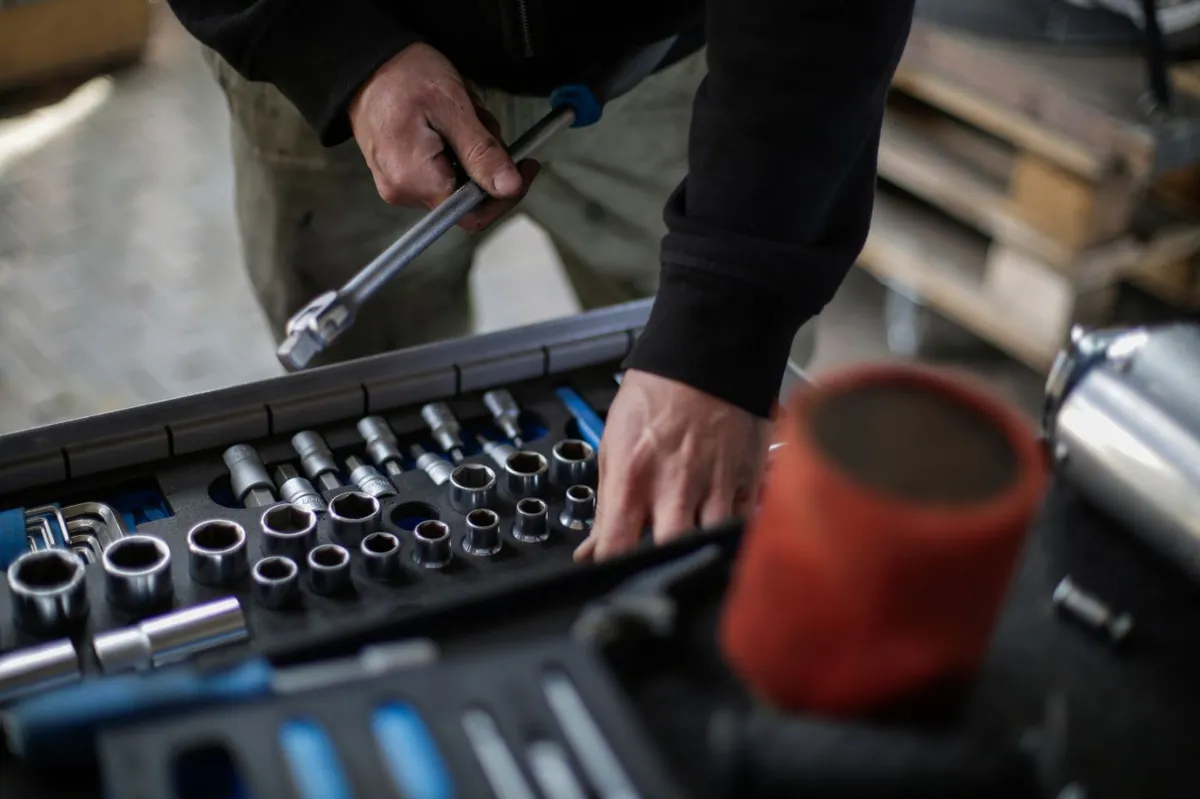
Can you do both ITI and a short-term course?
Yes, and many people do. An ITI gives a base, and a short course adds specific practice, such as wiring a distribution board, pipe work drawings or AC servicing. Combining them can make you more confident in a trade test.
Employers abroad often value both: a certificate that shows training, and practical skill that shows you can do the job. Our post on the Gulf trade test explains how skill is checked. If you are thinking of working abroad, remember that employers decide on skill, experience and documents together, not on a certificate alone.
What should you check before joining any technical course?
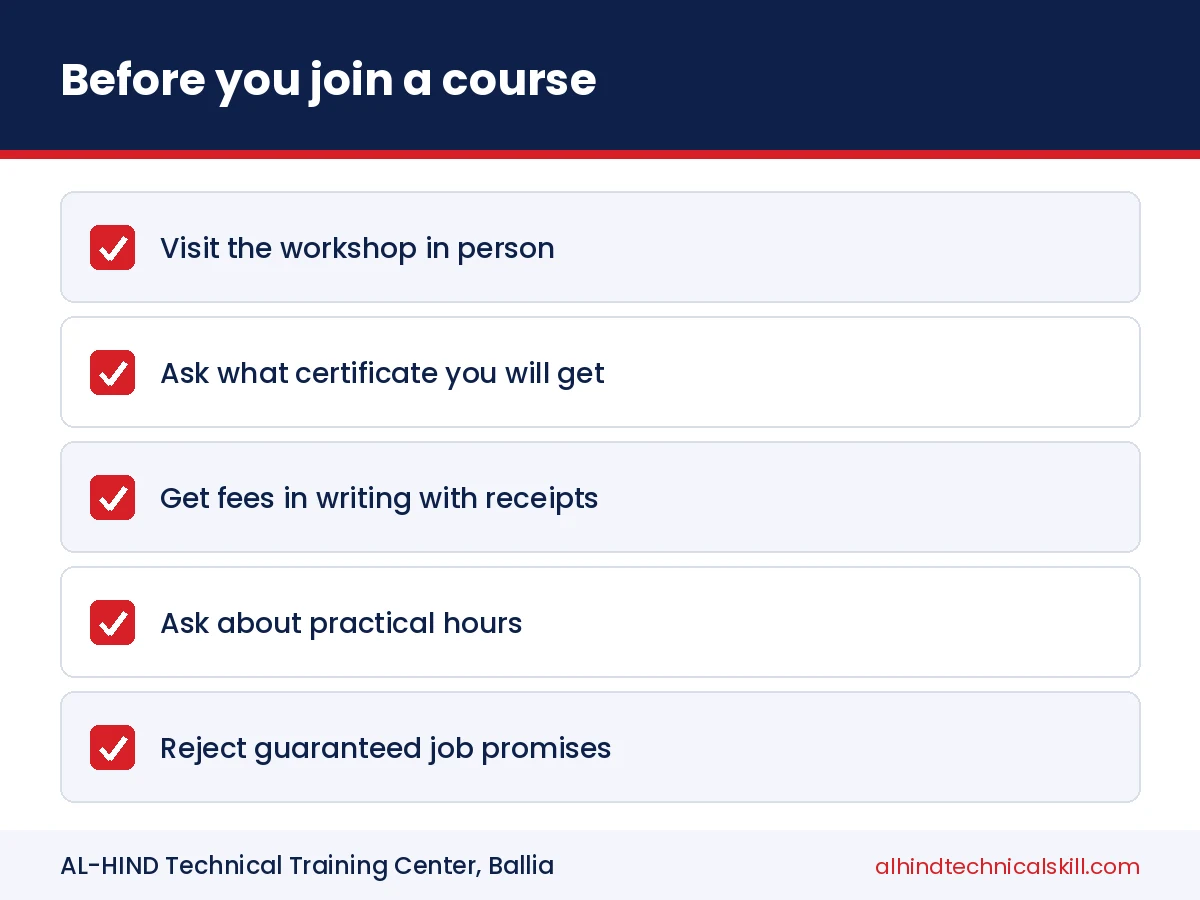
Check the instructors, the workshop, the tools, the certificate type and the honesty of the promises. A good institute will show you its practical area and answer questions clearly without pressure. For more on this, read our post on how to choose a technical training institute.
- Visit the centre and see the workshop in person.
- Ask what practical work each student does per week.
- Ask what the certificate is and who issues it.
- Ask for fees, in writing, with a receipt for every payment.
- Be careful of any institute that promises a guaranteed job or visa.
- Talk to former students if you can.
The National Skill Development Corporation (NSDC) works on skill training in India and its site is a useful place to learn how skill programmes are organised. Use official sources when a claim about certificates or schemes sounds too good.
How does the choice change for Gulf jobs?
For Gulf jobs, employers look at trade skill, experience, documents and safety awareness, so any route that builds real skill helps. An ITI certificate is often accepted as proof of training, and a short course can give extra practical confidence. Neither guarantees selection.
Plan backwards: decide the trade, then check what certificates and tests employers in that field ask for. Our guides on the process to work in the Gulf and documents required will help you plan. Avoid paying anyone who says a particular certificate will guarantee a Gulf visa.
Why learn at Al-Hind Technical Training Center?
Al-Hind Technical Training Center in Ballia offers practical, hands-on technical training for local youth, with counselling to help you pick the right course for your situation. We explain the Gulf job process in simple words and offer placement assistance as guidance, never as a guarantee. See our list of courses, learn about us, or ask a question on the contact page.
Frequently asked questions
Is ITI better than a short-term technical course?
Neither is always better. ITI is longer and carries a recognised national certificate, which helps for some government and apprenticeship paths. A short-term course is faster and focused on practice. Choose based on your goal, time, family situation and how soon you need to earn.
Can I get a Gulf job after a short-term course?
A short-term course can build practical skill, but employers also check experience, documents and often a trade test. No course can guarantee a Gulf job. Use it to prepare, verify every offer, and follow the official process for overseas employment.
Is an ITI certificate valid for Gulf jobs?
Many employers accept an ITI certificate as proof of training, but requirements vary by employer and country, and some ask for attestation. Always confirm the current document rules in writing from the employer or a verified recruiter before paying for any process.
What can I do after 10th for a technical career?
After 10th you can join an ITI in a trade, take a short-term technical course, or continue school and add a skill later. Pick a trade with steady demand near you, visit the training centre, and ask about practical work before admission.
Can I do a short-term course after ITI?
Yes. Many ITI pass-outs take a short course to improve practical skill, learn new tools or prepare for a trade test. This can raise your confidence and help in interviews, though it does not replace work experience.
How do I know if a technical institute is genuine?
Visit the centre, see the workshop, ask for written fees and certificate details, and avoid anyone who guarantees jobs or visas. Check reviews and talk to former students. Never pay large amounts without receipts and clear written terms.
Conclusion
The ITI vs short term course question has no single answer. ITI suits those who want a recognised certificate and can study longer, while a short-term course suits those who want practical skill quickly. Many people use both.
Not sure which path fits you? Call or WhatsApp 7393017040 or 7860262615, or visit the centre at Umargang Gawar Road, near Bank of Baroda, Ballia, Uttar Pradesh 277001. We will talk through your situation honestly.