Safety diploma subjects usually include hazard and risk assessment, fire safety, first aid, electrical safety, working at height, PPE and incident reporting. The exact syllabus varies by institute, so ask for it in writing. Technicians, ITI pass-outs and 10th or 12th pass youth can all benefit.
Key Takeaways
- Safety diploma subjects cover hazards, fire, first aid, electrical safety, height work and PPE.
- Syllabus, eligibility and duration differ by institute, so ask in writing.
- Technicians can add safety training to their trade skills.
- For electric shock, switch off safely if you can, then call 108 or 112.
- A safety course supports a career but never guarantees a job or visa.
What are the safety diploma subjects taught in a course?
Safety diploma subjects usually include safety basics, hazard identification, risk assessment, fire safety, first aid, electrical and mechanical safety, PPE, work permits, accident reporting and safety laws. The exact list and depth differ between institutes, so always ask for the written syllabus.
An industrial safety course trains you to notice danger before it hurts someone. A safety officer or supervisor does not only wear a helmet and give orders. The job is to study how work is done, find what can go wrong, and help the team work in a safer way.
The subject table below shows common topics and what they teach. It is a general guide, not the fixed syllabus of any one centre. You can read about a local programme on our safety course in Ballia page.
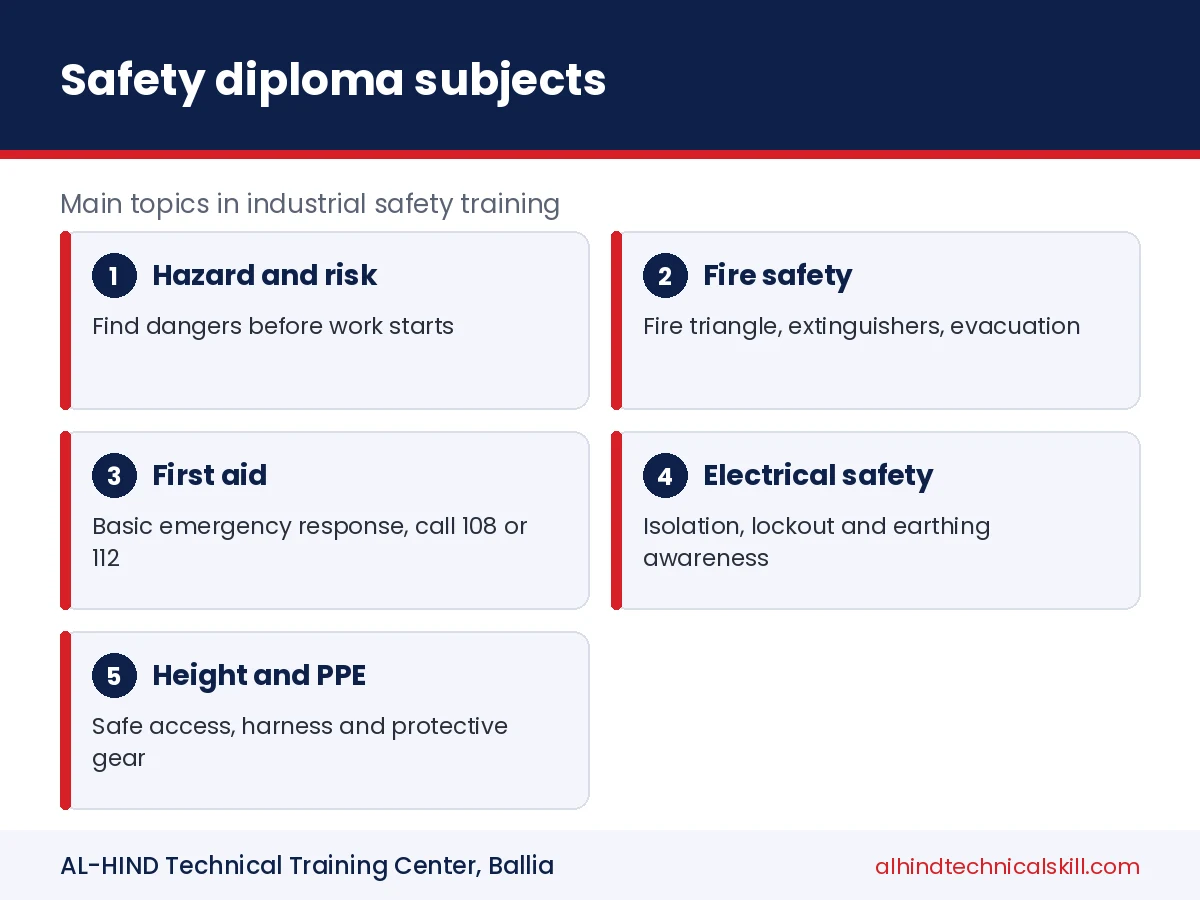
Which topics are most common in industrial safety diploma programmes?
The most common topics are hazard and risk basics, fire safety, first aid, electrical safety, working at height, confined spaces, PPE and safety documentation. These are the areas where most site accidents happen.
| Subject | What it covers | Why it matters |
|---|---|---|
| Safety basics | Unsafe acts, unsafe conditions, safety culture | Builds the right mindset |
| Hazard and risk assessment | Finding hazards and judging risk | Prevents accidents before work starts |
| Fire safety | Fire triangle, extinguisher types, evacuation | Fire is a major site risk |
| First aid | Basic emergency response | Helps until medical help arrives |
| Electrical safety | Isolation, lockout, earthing awareness | Shock and burn prevention |
| Working at height | Scaffolds, harness, ladders | Falls are a leading cause of serious injury |
| Confined space and hot work | Permits, gas checks, fire watch | High-risk tasks need strict control |
| PPE | Selection, use and care | Last line of protection |
| Reporting and investigation | Incident reports, near misses, root causes | Helps stop repeats |
Why is the fire triangle important in safety training?
The fire triangle shows that a fire needs three things: heat, fuel and oxygen. Remove any one and the fire stops. Safety courses teach this because it explains how extinguishers, fire blankets and good housekeeping work.
You will also learn that different fires need different extinguishers, and that electrical fires should not be fought with water. If you are not trained, your first duty is to raise the alarm and leave safely. The National Fire Protection Association (NFPA) publishes well-known fire safety codes and public education, which shows how seriously fire safety is treated worldwide.
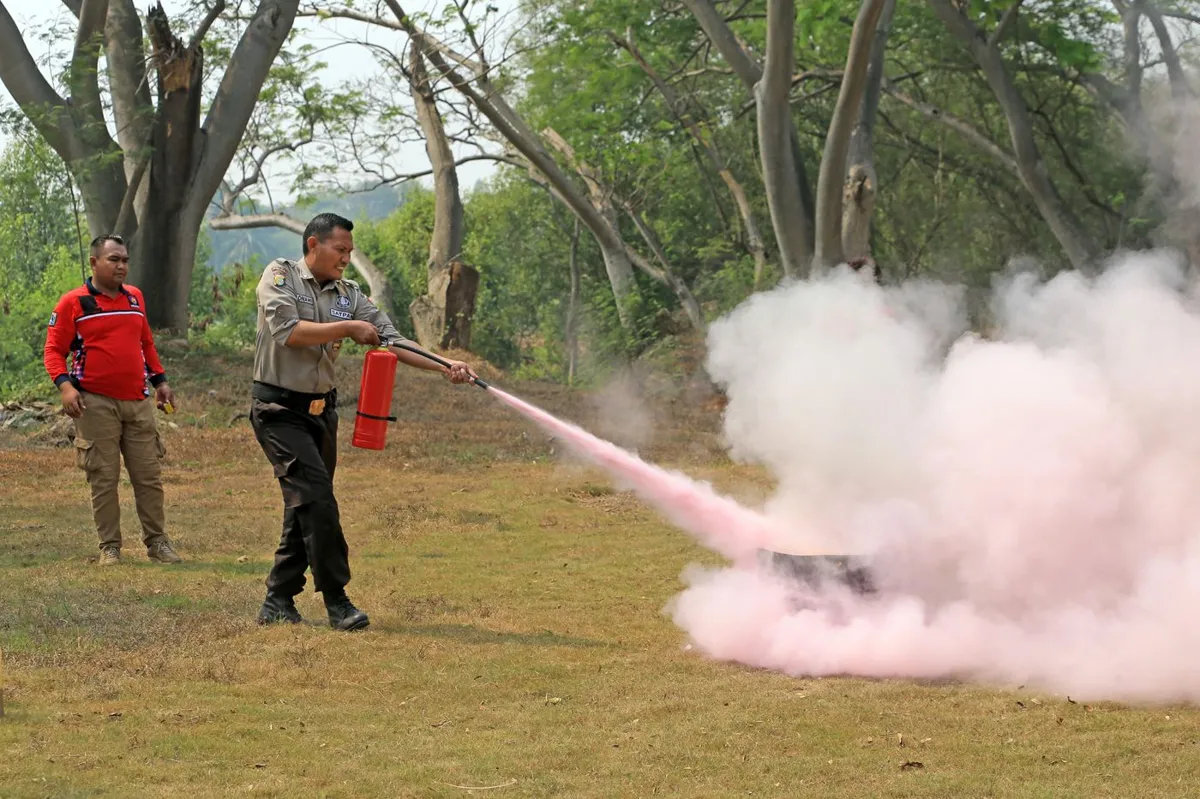
What do first aid and emergency response modules teach?
These modules teach you to stay calm, make the area safe, call for help and give simple first aid until medical help arrives. In India, you can call 108 for an ambulance or 112 for the emergency number.
For an electric shock, the standard advice is: do not touch the person if they may still be in contact with live power. Switch off the power at the main switch if you can do so safely, then call 108 or 112. Do not use wet or metal objects to move wires. After the power is off, check breathing and follow your first aid training. Only people trained in first aid should give treatment such as CPR.
Who should do a safety diploma course?
Safety diploma courses suit 10th or 12th pass candidates, ITI pass-outs, technicians, supervisors and anyone who wants a career in site safety. They also help electricians, welders, pipe fitters and AC technicians who want to work more safely and stand out.
- Youth who want a career in industrial or construction safety.
- Technicians who want safety knowledge to support their trade.
- Supervisors and helpers who may become safety assistants.
- Those planning Gulf work, where site safety rules are strict.
Eligibility, duration and fees differ by institute, and we have not listed any figures here. Ask for them in writing. Also remember that a safety course is not a promise of a job.
How does a local diploma compare with international safety certificates?
Local diplomas and international certificates are different things. Internationally known bodies such as NEBOSH and IOSH offer recognised safety qualifications, and OSHA-based courses are also known in some regions. Employers decide which they accept.
- Ask which certificate an employer actually prefers for the job you want.
- Check who issues the certificate, and what the exam involves.
- Begin with a solid base course, then consider higher certificates later.
- Do not pay for a certificate that you do not understand or that has no exam.
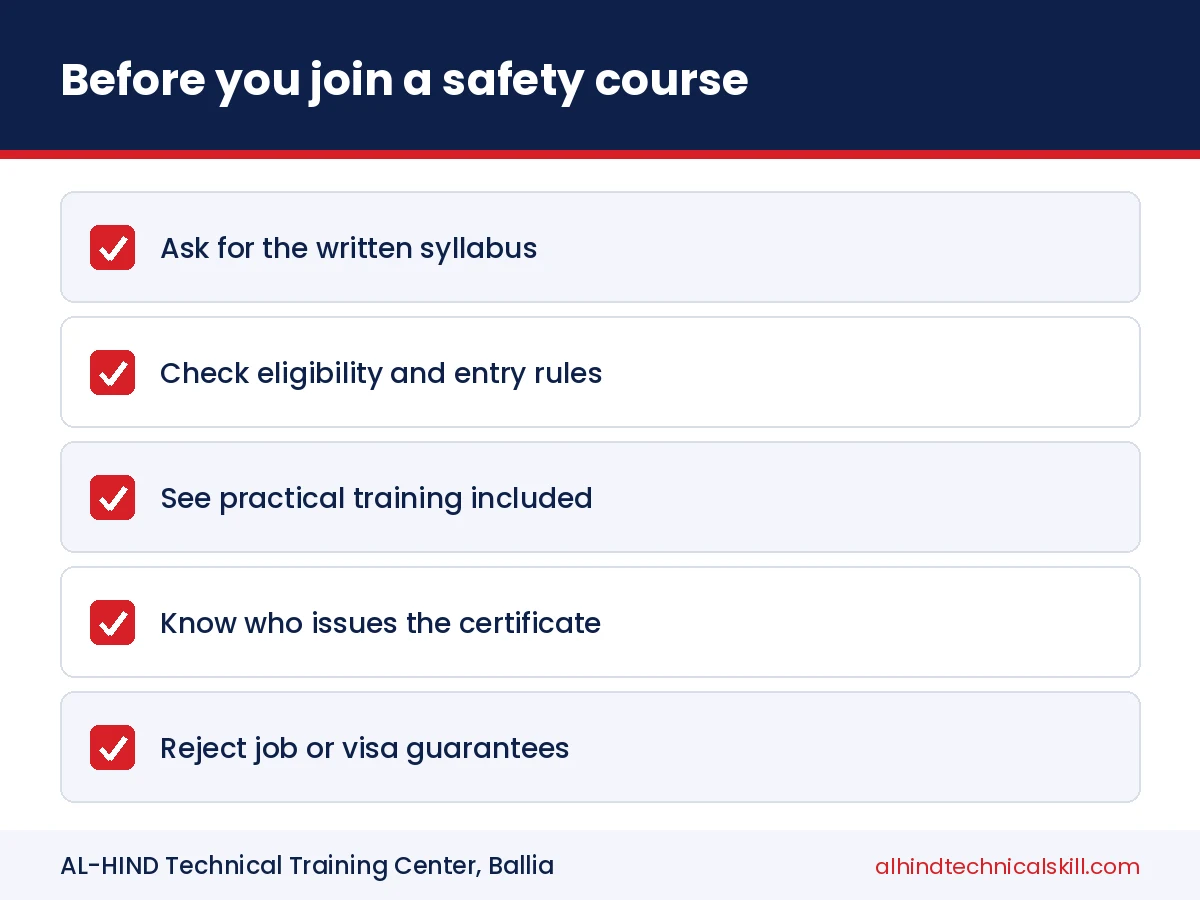
Practical safety skill matters as much as paper. A safety person must speak up, explain risks simply and set an example. Learn to write a short incident report and to run a short toolbox talk. These skills help in any country.
How can a safety course help in Gulf careers?
A safety course gives you knowledge that Gulf employers value, such as hazard awareness, PPE use and permit rules. It can support your application, but employers also check experience, documents and sometimes a test. It does not guarantee a job or visa.
For electricians, safety knowledge adds to practical skill. See our guides on electrical safety rules, welding safety rules and PPE for technicians. If you are planning overseas work, read about the process to work in the Gulf, and verify every offer using the official eMigrate portal.
Why learn at Al-Hind Technical Training Center?
Al-Hind Technical Training Center in Ballia focuses on practical learning and safe working habits. We also provide counselling and guidance on the Gulf job process, and placement assistance means support, not a guarantee. To see how safety learning fits with each trade, view the safety course, browse all courses or learn how to join on the admission page.
Frequently asked questions
What are the main safety diploma subjects?
Common subjects include safety basics, hazard and risk assessment, fire safety, first aid, electrical safety, working at height, confined space and hot work, PPE, and incident reporting. Content varies by institute, so ask for the written syllabus before you join.
Who can join a safety diploma course?
Eligibility differs by institute, but many courses accept 10th or 12th pass candidates, ITI pass-outs and working technicians. Ask the centre for entry rules in writing. A safety course helps your career, but it does not guarantee a job.
Is a safety diploma enough for a Gulf job?
A safety diploma supports your application, but Gulf employers also check experience, trade skill, documents and sometimes a test. No course can guarantee a job or visa. Verify every offer through official sources and avoid paying unverified agents.
What should I do first when someone gets an electric shock?
Do not touch the person if they may still be in contact with live power. Switch off the power safely if you can, then call 108 for an ambulance or 112. Only trained people should give further first aid such as CPR.
Are NEBOSH and IOSH the same as a safety diploma?
No. NEBOSH and IOSH are international bodies that offer their own safety qualifications, while a diploma is issued by the institute or board that runs it. Employers decide what they accept, so check the job requirement before choosing.
Can a technician do a safety course too?
Yes. Electricians, welders, pipe fitters and AC technicians often add safety training to their trade skills. It improves how they work and helps in interviews, though practical trade skill and experience remain the main requirements.
Conclusion
The best way to understand safety diploma subjects is to look at the written syllabus, check how much is practical, and match it to your career goal. Safety training gives you knowledge that protects lives and supports your career, though it does not guarantee any job.
To ask about safety training in Ballia, Call or WhatsApp 7393017040 or 7860262615, or visit the centre at Umargang Gawar Road, near Bank of Baroda, Ballia, Uttar Pradesh 277001.